
While I believe there is truth to that sentiment, I have come to realize there is more to horsemanship than trying to force an equine to do what you want. Maybe instead I should say, “if I am able to establish mutual respect with a one thousand-plus pound animal, I can handle anything.”
Pressure isn’t Control
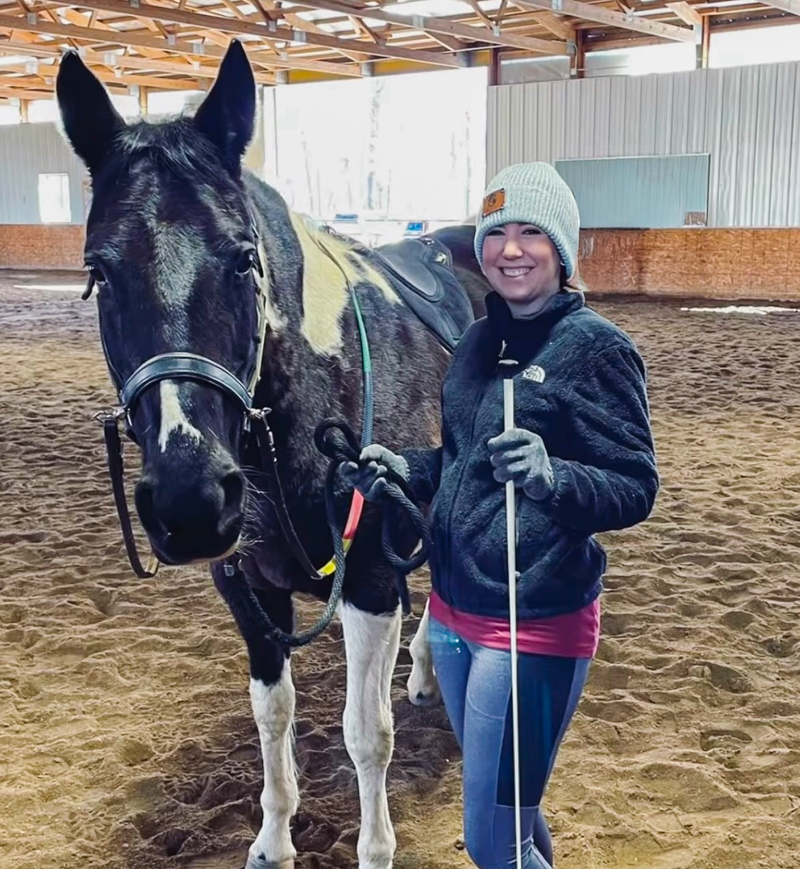
In the early days of volunteering, horse leaders led the horse using a thicker lead rope attached to the bottom of the halter. This is nothing unusual, but the heavy rope almost created an illusion of having more control over the horse during a lesson. What looked like “more control” was really just more pressure, and the horses could feel it immediately.
Horses are sentient beings and they are very in tune with their senses. An adaptive riding lesson can be a lot for them, having up to three volunteers surrounding them while carrying an often wiggly participant. As the program evolved, so did our methods for leading.
The thick lead rope was replaced with a thinner one, and a “wand” was introduced to offer guidance. The wand allows for direction without constant pressure on the halter and can assist with correcting speed, halting, or minor behavioral issues. Before leading a horse during a lesson, volunteers go through a training program designed to build both skill and relationship. The focus is not only handling but also connection.
When we release pressure, we build trust
Forming a bond with a horse is not always instant, and some require more time to earn their trust than others. As prey animals, horses are naturally alert and often have a heightened awareness of their surroundings. Because of this, they are deeply affected by the energy and emotions of the people around them. Even something as simple as a muck bucket left in an unfamiliar spot can cause a horse to hesitate or react.
Being mindful of our own emotions and behaviors can either support or hinder the connection we are trying to build. The calmer and more confident the leader is, the safer the horse feels. When a horse feels safe, trust begins to form.
When both horse and leader have respect for one another and feel secure in that relationship, it creates a stronger foundation for everyone involved. A horse that respects its handler is more willing to participate in the work being asked of them.
How this shows up in everyday life
I have seen this scenario transfer into daily life in so many ways. When life becomes full of uncertainty and we feel like we are losing control, it is easy to grip tighter. Whether it is in our homes, relationships, jobs, or even within ourselves, the instinct to force a solution can quickly take over.
Learning how to properly handle horses has taught me the importance of checking in with my emotions before reacting to what is happening around me. Horses respond to energy before they begin responding to instruction, and the same is true in life. When we allow ourselves a moment to pause and take a few deep breaths, it helps to lower our energy levels and calm the nervous system.
I have become much more aware of my emotions and energy since regularly being around horses, but it is still a practice that I have to consciously work on each and every day. When we can begin to calm our body and mind, it allows for a sense of steadiness in the situations we cannot control.
0 Comments